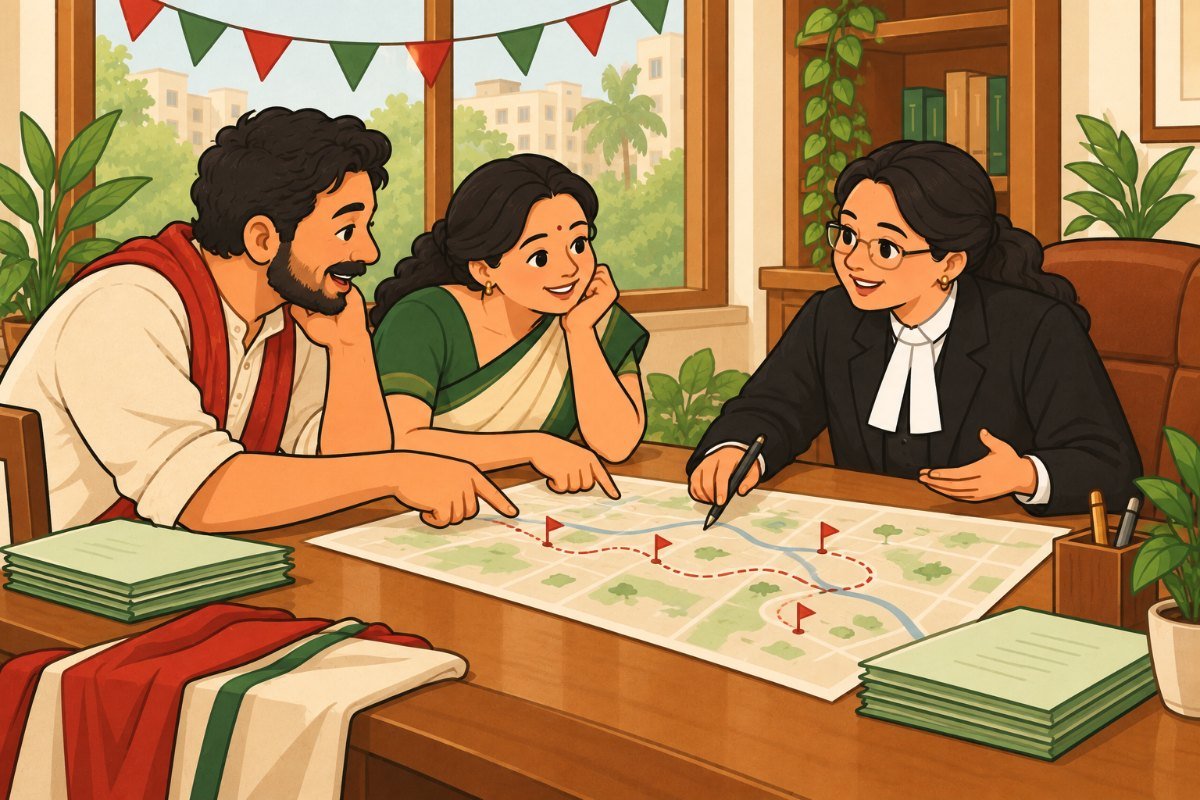
Processions are part of many festivals in Mumbai: Eid-e-Milad julus, Muharram processions, Ram Navami and Gudi Padwa shobha yatras, Shiv Jayanti and Ambedkar Jayanti rallies, Ganesh and Durga immersion processions, and church feast processions. Every procession on public roads needs police permission. This guide explains the process.
Key facts
- Law
- Sections 33 and 36, Maharashtra Police Act, 1951
- Where to apply
- Senior police inspector of the station where the procession starts, with copies to stations on the route
- When
- Ideally two to three weeks ahead
- Also needed
- Traffic police clearance for major roads; separate written permission for loudspeakers
- If refused
- Ask for written reasons; a refusal can be challenged before the High Court
The legal basis
- Under Section 36 of the Maharashtra Police Act, 1951, police officers (not below the rank of Inspector) can regulate processions: their route, timing and conduct. Under Section 33, the Commissioner can make rules about processions and loudspeakers.
- Courts recognise that taking out a peaceful religious procession on public roads is part of the freedom of religion and assembly, but subject to public order, and the police can reasonably regulate routes and timings.
How to apply
- Apply early, ideally two to three weeks ahead, to the senior police inspector of the police station where the procession starts, with copies to the stations it passes through.
- Give details: the organiser’s name and contact, expected number of participants, vehicles, the proposed route with start and end points, start and end times, any loudspeakers or music, and the names of volunteers.
- Traffic police: processions affecting major roads also need traffic police clearance.
- Loudspeakers: need separate written permission under the noise rules. See loudspeaker rules.
Conditions the police commonly impose
- A fixed route and time, often avoiding sensitive areas, hospitals and peak traffic.
- Limits on the number of vehicles and participants.
- No weapons, no DJ or high-decibel systems, and no provocative slogans or songs. Courts granting permission for processions have emphasised these conditions.
- Organisers must provide volunteers and are responsible for the conduct of participants.
- Videography in sensitive cases.
If permission is refused or the route is changed
- Ask for the refusal in writing with reasons.
- Offer reasonable alternatives: a shorter route, fewer vehicles, different timings.
- Courts have held that a procession cannot be refused merely because another community lives along the route, but they also respect genuine police assessments of law and order and often approve alternative routes.
- A refusal can be challenged before the High Court by writ petition. Apply well in advance so there is time to do so.
Organisers’ liability
Organisers who breach permission conditions can be prosecuted under the Maharashtra Police Act and for disobeying a lawful order (Section 223 BNS). Hate speech and provocative conduct attract separate offences.
Frequently asked questions
Do we need permission for a small procession around our building?
If it uses public roads, yes. A procession wholly within private premises does not need route permission, though loudspeakers still do.
Can a mosque or temple trust apply for its community’s procession?
Yes. The trust or an organising committee can apply. If it collects money from the public, consider Section 41C. See Section 41C permission.
See also: Ganeshotsav pandal permission and Navratri event permissions.
Planning ahead? See the festival permissions calendar 2026–27 for dates and when to start preparing, or all festival guides.
Consultations are by appointment. To fix a time, telephone +91 99301 50560 or send a message on WhatsApp.
This guide describes the law as understood in October 2026. Procession conditions are decided case by case by the police. It is not legal advice.
More festival guides
- Festivals in Housing Societies
- Wedding Baraat, Band and DJ in Mumbai
- Chhath Puja in Mumbai
- Loudspeakers at Places of Worship in Maharashtra
- Makar Sankranti Kite Flying
- Holi in Mumbai
- Dahi Handi Rules in Maharashtra
- Navratri Garba and Dandiya Events in Mumbai
- Ganeshotsav Pandal Permission in Mumbai
- New Year and Christmas Parties in Mumbai
- Diwali Firecrackers in Mumbai
- Bakri Eid Qurbani in Mumbai